
Category Archives: Education
Computer Forensics: A Cyber Career Roadmap

Maybe you don’t like the idea of mopping up after a crime scene – the blood, the bullets etc. At the same time, you love piecing together mysteries. Thankfully, there’s still a job for you in computer forensics. Here’s what it’s all about and how plug yourself into this little-known, but exciting career.
Educational Requirements
To get into digital forensics, you need a good education. The requirements can be fairly minimal, however, in terms of the actual content, quality counts more than quantity. Many computer forensics professionals learn their skills “on the job,” with a strong basic foundation in computer programming or computer forensics.
Because many of the strategies and tactics change over time, it’s difficult to set hard and fast requirements for applicants. A working knowledge of computers is necessary, but beyond that, an investigator will have to be comfortable learning new hardware and software, some of which is custom and proprietary. They may also need special security clearance if they are working on government projects.
Degrees
For those without experience in law enforcement, military, or government, there are degrees. The most common one is an Associate Degree in computer forensics. This is a two-year course of study where the student completes general education courses that are specific to a career in computer forensics.
Various courses in cybercrime, intrusion detection systems, and basic legal protocols are covered. There is also some focus on technical writing, public speaking, and algebra.
Finally, with an Associate’s degree, the individual usually has to complete an internship before graduation. This internship gives the student work experience that will help in finding a job with a forensics specialist.
If a degree isn’t something you want to pursue, there’s also a professional certificate training course in computer forensics. This is a common method of learning the basics of computer forensics. Law enforcement or computer securities professionals usually go this route. Students enrolled in these types of programs usually have a computer or legal background, eliminating the need for additional schooling.
Certificate programs require less study – just 10 courses. However, it may be more challenging for those without prior education in computers.
And, while doctoral degrees in computer forensics aren’t common, they may be in the future as the need for forensics evolves and we become more and more dependent on electronics for daily living. More and more information is being stored in the cloud, on devices locally, and in increasingly complex systems.
Experience
A lot of computer forensics experts have experience in law enforcement, as a private investigator, or in the military. The most successful will also have extensive computer programming or some other related field experience. This digital forensics expert, for example, hires those with experience in law enforcement and intelligence organizations.
As with most jobs, the more experience, the better. Many of the best forensics experts and investigators are former FBI special agents, former CIA agents, former U.S. State Department officials, and professionals from international crime and anti-terrorism units.
Experience in behavioral science, latent fingerprinting, polygraph examinations, and traditional forensics doesn’t hurt either.
Jared Stern, a certified digital forensic examiner, is a federal and state court-admitted computer and cell phone forensics expert. Mr. Stern is also the President of Prudential Associates, an investigative agency that uses a powerfully-equipped forensics lab which goes above and beyond the capacity and capability of over 90 percent of U.S. law enforcement labs. His articles appear mainly on criminal science education and industry websites.
Why students need to be more involved with global events

We live in an ever-shrinking world. The dawn of the internet age has made physical boundaries redundant. In this age of global connectivity, it is important for the youth to be both aware of and involved in global events. Active connectivity is almost a prerequisite in today’s business environment. Companies are increasingly looking to hire people who are comfortable being globally networked. Working in transnational teams is the order of the day.
Comfort in dealing with disparate cultures comes from an open mind and the curiosity to learn. It’s easier to relate to someone halfway around the globe, when you are aware of the local culture and current news. Most US universities offer opportunities to participate in global events. This is offered through various global classroom programs as well as volunteer schemes and other International Outreach Programs. Whether it is volunteering for an event like the Olympics or a regional conference on climate control, student life offers you the opportunity to interact and learn on a global scale.
A simple way to check how globally aware you are, is to answer the following question ‘name the current top 5 international crises’. If you struggle to get beyond the crisis in Syria, then you need to work on your awareness and connectivity. Apart from International Outreach programs at Universities there are a host of avenues online like the Global Lounge Network.
When a global crisis strikes, men like Najib Mikati step forward and shoulder the responsibility of easing the crisis. Najib Mikati is a Lebanese politician who has twice served as the Prime Minister of Lebanon, for five weeks in 2005 and then from 2011-14. Najib started his career as a businessman and founded the telecommunications company Investcom in 1982. He sold Investcom to South African telecom giant MTN for $5.5 billion in 2006. In politics he was the minister for public works and transport from December 1998 to 2000. He is credited with creating a centrist and reformist mainstream in Lebanese politics. He is an ardent supporter of getting students involved in political activities. You can catch up with updates on Najib Mikati here.
Young men and women have the creativity, potential and capacity to make changes on a global scale. Getting involved in global events as a volunteer is just one way to learn and broaden your horizons. Increasingly companies are looking to hire young people who have a global perspective and those who are able to fit into and work in global teams.
To answer the earlier question on the top 5 crisis, the Middle East continues to be the biggest flash point where the 4-year-old civil war rages on in Syria. 3.3 million people, including 1.7 million children have fled the country. This conflict has spilled over into neighboring Iraq, already ravaged by conflict. The Russian-Ukrainian face-off continues to keep the possibility of an all-out war simmering. The outbreak of Ebola across West Africa has already caused over 7,000 deaths in Sierra Leone and Liberia.
Why a Graduate Certificate Might Be a Better Be Than a Master’s Degree

Today’s highly competitive job market has left many college students wondering whether the extra time and money to get a master’s degree will pay off in the form of improved career prospects. But what many don’t realize is that a master’s degree isn’t the only option for post-baccalaureate education. There’s another, less expensive, faster way to gain industry-specific skills at the post-graduate level — the graduate certificate.
A graduate certificate takes about half as long to earn as a master’s degree, and is a fraction of the cost. In most fields, including project monitoring and evaluation, a graduate certificate can improve your job prospects and raise your salary just as much as a master’s degree. Even if you already have a master’s degree, a graduate certificate is a fast and economical way to upgrade your skills and stay competitive in the jobs market.
Advance Your Education in Less Time
If you want to enhance your skill set and pad your resume, but also want to hit the job market as soon as possible, a graduate certificate is the way to go. Online programs are a popular choice for students who want to earn graduate certificates; you could go to school online for a graduate certificate in project monitoring and evaluation, for example, while still holding down a full-time job.
The typical graduate certificate program consists of four to seven credits, although some programs can comprise as many as 15 credits. That’s about half as many as a master’s degree, so the degree takes a lot less time to earn — usually a year or less, compared to two or more years for a master’s. It’s a great choice if you’re looking for a qualification that could help you get that big promotion you’ve got your eye on, if you want to earn more money, or even if you want to change careers.
Boost Your Earning Power
You already know that people with master’s degrees tend to earn more than people who have only a bachelor’s degree, but you don’t have to commit to a master’s program to bring home bigger paychecks. Graduate certificates are especially valuable for people working in technical fields, such as heating and air conditioning, or in emerging fields, such as cybersecurity, social media marketing, or homeland security. Thirty-nine percent of men with a graduate certificate earn more than their counterparts with a bachelor’s, and 34 percent of women with graduate certificates make more than their baccalaureate-educated peers.

Save Money
If you’re not sure whether you want a master’s degree or you’re in a field where a graduate degree doesn’t necessarily equal a higher salary, a graduate certificate can get you the education you need to advance at a much lower price tag.
A graduate certificate runs about $5,000, compared to the tens of thousands of dollars a master’s degree costs. And if you’ve already got a master’s degree, it just doesn’t make sense to go back to school for another one when a graduate certificate could give you the extra specialization you need at a lower price and with a shorter time commitment.
Improve Your Job Prospects
While it’s true that there are certain fields where a master’s degree is a must — think law, medicine, or business — in most fields, a job candidate with a graduate certificate will always win out over one with only a bachelor’s degree. Employers are impressed by the extra credential, as most graduate certificate programs are tailored to meet industry demands.
Since the programs are so short, there’s no risk of your skills becoming outdated by the time you hit the job market. They’re also a good way to update skills later in your career, especially if you want to break into or advance in an emerging field that didn’t even exist when you were a traditional college student; one-third of people who earn graduate certificates are over age 30.
If you’re reluctant to commit to a lengthy, expensive master’s degree program, why not consider a graduate certificate instead? You can earn a specialized post-baccalaureate qualification in half the time and at a fraction of the cost of a master’s degree, and hit the job market faster and harder with the kinds of skills that make employers stand up and take notice.
Is an LLM in Taxation the Right Choice for You?

An LLM, or Master of Laws, is an advanced degree that lawyers can earn after completing a JD. While the degree is popular with international students who want to gain some experience with the American legal system and perhaps practice law in the U.S., it’s also popular with lawyers who want to specialize in a particular area of law. While LLMs are available in a range of legal specialties like democratic governance, intellectual property law, and patent law, the traditional specialty has been tax law.
Many young lawyers aren’t sure whether they should pursue an LLM degree. But if you want to specialize in tax law, the LLM in Taxation is still the degree for you. If you didn’t attend a top law school, it can beef up your resume. It can help you transition to practicing in a different part of the country. If you aspire to teach law at the university level, you’ll need at least an LLM, if not a Ph.D., to land a tenure-track position.
Specialize in Tax Law
The number-one reason to get a master of laws degree is to become a tax attorney. Tax attorneys aren’t accountants; they help clients with legal issues surrounding the payment of local, state, and federal taxes. This can include everything from helping a couple avoid paying taxes on their assets when they split, to protecting the wrongfully convicted from having to pay income taxes on restitution money. It’s a highly specialized area of law, but you’ll have the chance to work on a diverse range of cases. An LLM in Taxation takes about a year to earn, and imparts practical experience in addition to specialized legal knowledge.
Make Your Resume More Impressive
If you didn’t manage to get into a top law school, an LLM offers you the chance the put something more impressive than your regional or state university on your resume. That’s because it’s often easier to get into an LLM program than a JD program, because most American lawyers don’t see the need to earn an LLM. They just get their JDs and go straight into practice. So the school that wouldn’t accept you into its JD program will be much more likely to accept you into its LLM program, and you’ll be able to prove that you can keep up with students at a nationally-ranked program.

Move Your Practice to a Different Part of the Country
Let’s say you’ve decided that you don’t want to hang around and practice law in the same part of the country where you got your JD. That’s fine, but it can be hard to convince a law firm to hire an attorney from another state or region; they’ll be concerned that you’ll ultimately decide not to relocate or that you will, only to depart again in a few years.
Earning an LLM in the region to which you’d like to relocate can eliminate these concerns, since by the time you apply for jobs, you’ll already be living in the area. An LLM from a school that’s well-respected in your region of choice can also improve your job prospects in that region.
Teach Law Yourself
If you want to become a professor of law, you’re going to need more years of education than just a JD can provide. You’ll need at least an LLM to compete for tenure-track faculty positions in university law programs. Many tenure-track positions require candidates to have a PhD, but you’ll need to earn an LLM before you can qualify for a Ph.D. program.
Competition for adjunct teaching positions in law schools isn’t as fierce as it is for tenure-track positions, but don’t think you can land an adjunct position with just a JD. You’ll still need an LLM to qualify for most of these positions, even if they don’t offer tenure.
If you want to become a tax attorney, an LLM in Taxation can get you there. It’ll give you the specialized knowledge of tax law necessary to help clients will all kinds of taxation-related legal issues. However, that’s not the only reason you might want to consider an LLM. Whether you want to relocate, improve your job prospects, or land a teaching job, and LLM can help you achieve your law career goals.
How to transition out of academia (and why) once you get your Ph.D.
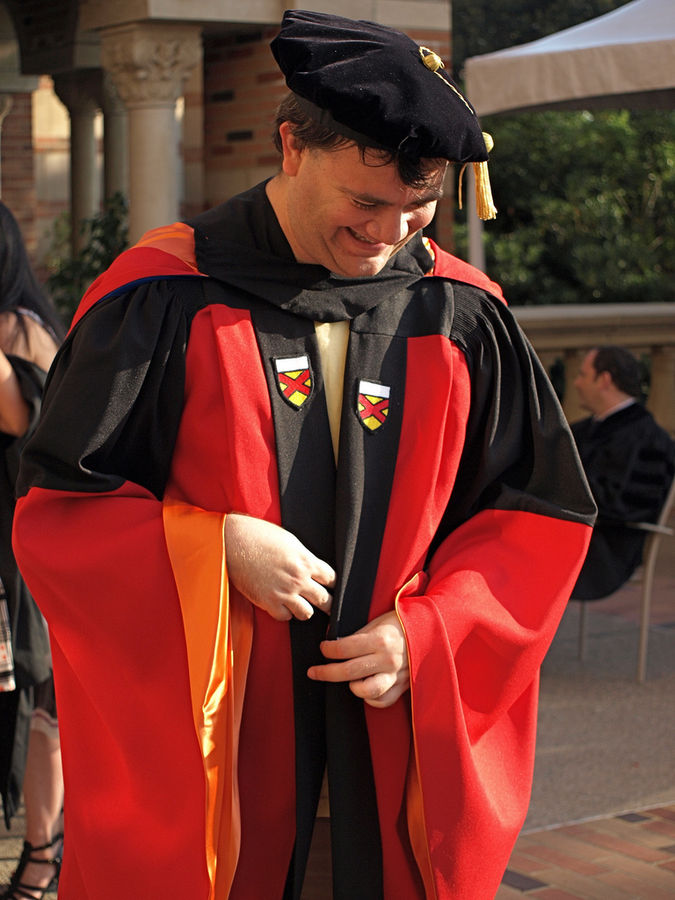
Traditionally, the Ph.D. is intended to prepare students for a career in academia. Most Ph.D. students hope to obtain a prestigious post-doctoral fellowship, followed by a tenure-track professorship, upon graduation. But The Chronicle of Higher Education reports that 76 percent of the academic labor force consists of adjunct professors who can’t qualify for tenure and make about $2,700 per course.
However, that doesn’t mean you shouldn’t earn a PhD. Earning a doctorate gives you critical thinking skills, teaches you how to collaborate, and bestows a level of expertise in your field that employers place a premium on. A Ph.D. can still lead to a lucrative career path, as long as you look for opportunities outside of academia upon graduation. You just have to learn how to market yourself, and you may want to seek advice from other Ph.D.-holders who have successfully navigated the transition out of academia.
Decide What You Have to Offer Non-Academic Employers
The smoothest career transitions out of academia belong to those who hold Ph.D.s in STEM fields — industry has long valued experts in science, mathematics, technology, and engineering. But you don’t have to hold a STEM Ph.D. in order to have a lot to offer a company. Ph.D.s in all fields impart some of the following qualities:
- Strong communication skills
- The ability to express complex ideas in a way that is easy to understand
- Creativity
- Problem-solving skills
- Self-direction
Translate the academic skills you learned while doing your Ph.D. into marketable job skills. You may have little industry experience, but if a company wants two or three years of experience, you can argue that work you did in the course of earning your doctorate required some or all of the skills needed for the job. Be specific about which of your skills meet the company’s job requirements. Customize your CV and cover letter to each position.
Allay Recruiters’ Fears About Candidates With Ph.D.s
Companies often fear that Ph.D.-holders will be too introverted, won’t be able to communicate with “regular” people, or will get bored with an industry job if they don’t feel intellectually stimulated. Let recruiters and interviewers know that you’re personable and down-to-earth, with great communication and people skills. An industry job can be just as intellectually stimulating as degree work or an academic position; make sure you can convey a genuine excitement about the job for which you’re applying. Point out that, in many Ph.D. fields, you need to be a team player in order to complete research or teach classes.
When you do a Ph.D., you’re essentially seeing a long and challenging project through to completion — play up that fact in interviews. Make clear that while you’re capable of working well with others, you’re also capable of working independently without a lot of supervision. Draw attention to your sense of accountability and remember, just because you have a Ph.D., you’re not inherently smarter than any of your future colleagues. Don’t act as if you’re owed a position.
Talk to Others Who Have Left Academia
You’ll have an easier time transitioning into an industry position if you complete a Ph.D. that prepares you for work in industry, especially one with strong, expected growth. But if you already have a Ph.D. in French, Russian literature, history, or some other field that appears to have a solely academic focus, don’t worry. You can translate any Ph.D. into a well-paid job.
Start by joining a professional organization for Ph.D.-holders who want to work outside of academia, such as Versatile Ph.D. Versatile Ph.D. sponsors nationwide networking events and more casual meet-ups for Ph.D.s who have, or want to, pursue careers outside of the Ivory Tower. You can discover more about your career options, find job listings on the group’s website, and get advice from other Ph.D.-holders about how to find jobs outside of academia. Registration is free, and members of one of the site’s many subscribing institutions can access premium content designed to help them find jobs.
Though the Ph.D. is traditionally meant to prepare students for a career in academia, the skills it teaches can be useful across a range of industries. Don’t feel that your Ph.D. limits you to teaching at the university level. In fact, it can open doors to lucrative, stimulating, and fulfilling careers in all kinds of industries, no matter what your field of study.


