
Category Archives: Education
Free college tuition for everybody! 4 countries that are making this happen
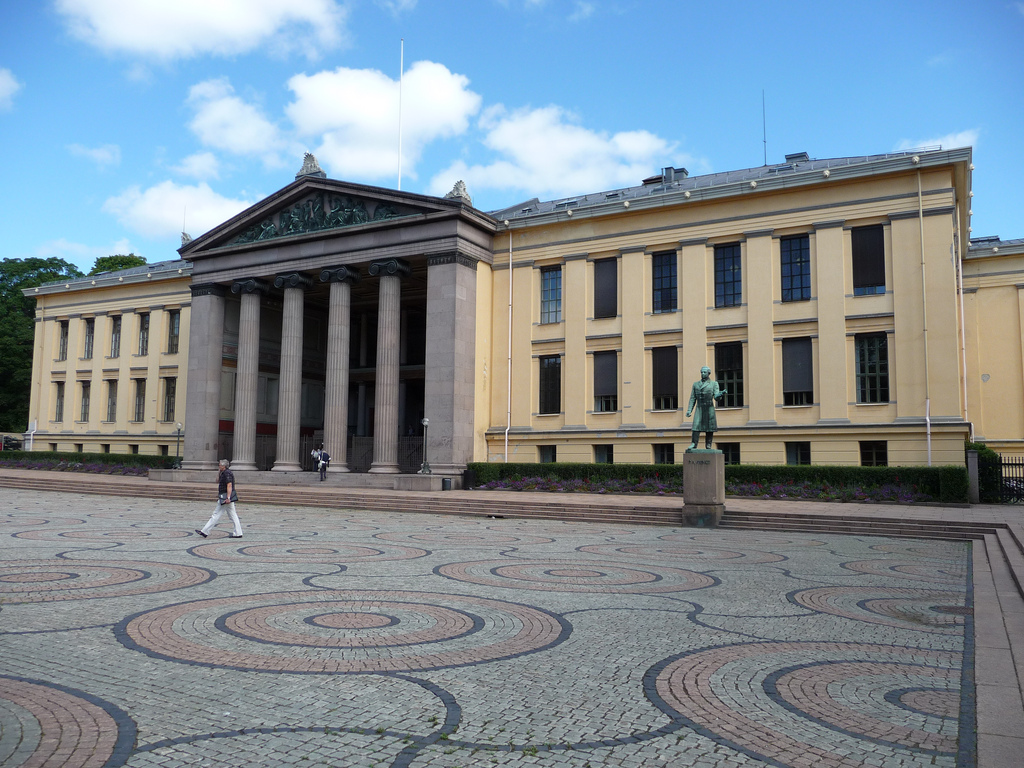
It is a seemingly inescapable problem for many young Americans. The work force is getting more competitive as the bulk of new jobs are being created in highly skilled fields, yet the cost of education is skyrocketing to healthcare-esque heights.
As a result of this conundrum, many feel they are in a proverbial Catch-22, having to choose between taking on crippling amounts of debt in the hope that the jobs they seek will be there for them when they get out of school, or take their chances with a high school diploma in the job market, or as an entrepreneur.
Meanwhile, across the pond, a tantalizing Third Way is materializing, as many schools in European countries are either drastically lowering or eliminating tuition fees for foreigners in a bid to attract them to their schools.
But why? In the article that follows, not only will we review each country’s free college tuition incentive programs, you’ll find out the method behind their madness…
1) Germany
With the scrapping of tuition fees in Lower Saxony this past year, every single university within Germany’s borders are now 100% free to attend, for residents AND for foreigners. What’s more, the degrees that these schools offer span most disciplines, with some programs not even requiring that you put together a formal application.
This all seems too good to be true, but in this case, it is, as the government of Germany has invested enormous amounts of money to attract English speaking foreigners to German schools so that its citizens might be exposed to native speakers of the language.
Germany also has many glaring skill shortages that it is staring in the face over the coming years, so the hope is that after foreigners complete their schooling, they will have loved their time in Deutschland so much that they will decide to pursue a career here as well. Go to school for free and get a job in an in-demand field after graduation? What is this, 1955?
2) Slovenia
Those looking to immerse themselves in a relatively obscure Central European country may want to consider spending some or all of their college career in Slovenia, as this nation offers easy access to Croatia and Italy for those seeking exciting weekend trip ideas.
In addition to only paying a paltry €30 registration fee, your meals here will also cost much less than you may be projecting, as the Slovenian government subsidizes meal plans, with the average meal costing half of what it would back in America.
While no school here tops international rankings, those looking for a piece of paper and a good time in their college years may want to consider coming to Slovenia.
3) Norway
If the fjords of Norway are beckoning you, then you’ll be happy to know that the schools here cost foreigners nothing to attend … not a single krone. Of course, the fact that Norway is one of the world’s most expensive countries, or that some schools in the Norwegian arctic are cloaked in 24 hour darkness for a portion of the winter will weigh on your decision, but there are many other positives that make this country a strong contender.
Outdoor lovers will have their hands full with activities such as skiing, hiking and Northern Lights viewing, while those that are serious about their academics will love the small class sizes, professor approachability and lightening fast internet access in even the most far flung of communities.
4) Sweden
Like its Nordic neighbor to the west, Sweden also offers college programs to foreigners that are highly attractive. Unlike Norway though, Sweden’s programs do charge tuition fees for those seeking a bachelors or masters degree.
Sweden makes an exception for those seeking a PhD, waiving tuition fees for those seeking the highest attainable academic honor. The workforce of the world is getting more competitive with each passing year, with even master’s degree owners beginning to feel the heat.
For members of this crowd, this program may be the opportunity to finally break apart from the pack, all while experiencing life in a foreign country in the process.
Take a Left: Studying in North West England

For all the appeal of London and southern England in general, the north west of England can hold its own just as well when it comes to accommodating the nation’s brightest minds. As glamorous as London and its southern counterparts may be, cities like Manchester and Liverpool shouldn’t be ruled out when you’re seeking that postgraduate degree, MBA or other higher education qualification.
So why would people pack all their things in the car and head for the north west rather than driving south?
Academic prowess
The north west boasts some fine universities and is a good place to study an MBA. Manchester itself, for instance, has four universities and there are a further 14 in the surrounding area. As you can imagine, this in itself has given the region a thriving student population. If you are looking for a particularly specialized qualification, you might like to try an MBA at the London School of Business and Finance in Manchester.
Major sports and entertainment hub
Football is something of a religion in the north west of England. The region boasts some of football’s biggest clubs, such as Liverpool FC, Manchester United (possibly the biggest club in the world!) and Manchester City. Then there’s the music scene, which has produced huge names such as the Beatles, the Smiths and the Chemical Brothers, to name but a few. And if you like to dance the night away, you’re not too far away from super nightclub, Cream, in Liverpool.
Lower accommodation costs
Students, of course, have to live on a budget and try to make their loan stretch as far as possible. Accommodation is a big part of the cost. In the north west, the average cost of accommodation is lower than in London and in the south in general. This gap is most noticeable when it comes to private accommodation, where there’s as much as £100 difference in the weekly rent between the North West and the capital. Think of all the money you could save for books or other expenses, especially when it comes to international students.
The northerners themselves
Sometimes it’s the people that make a place great to study in. Northerners are renowned for their open, happy-go-lucky nature. They’ll make you feel right at home while you settle into student life.
So when you’re flicking through the university prospectuses and deciding where to study, be open to looking north for your education. You can receive just as valuable an education. You’ll also be able to keep more money in your pocket for the graduation celebrations!
Join the Global Movement to Protect Africa’s Elephants!

Brought to you by 96 Elephants and The College Blender Team
96 elephants are killed every single day in Africa. You can help stop it.
The increasing demand for ivory is driving African forest elephants close to the point of extinction. People across the world are uniting with the Wildlife Conservation Society to protect them. Join the Wildlife Conservation Society to help stop the killing, stop the trafficking, and stop the demand.
You can do your part to save elephants now by pledging that you will not buy or sell ivory products in your country. To pledge and take part in the global movement, visit: http://www.96elephants.org.
3 of the best cities in Spain to study abroad

Unbeknownst to most people, Salamanca is one of the best cities in Spain to study abroad!
While taking on student loans may make you hesitant to take to the road on an epic trip with all the bills that you owe to your creditors, it doesn’t mean you don’t have to sacrifice seeing the world until you are 55.
An interesting way to get over this beguiling hurdle is to apply to study in your discipline overseas. Most universities and colleges offer arrangements like this, or you can go to the trouble of arranging it yourself.
One nation that is an excellent place to spend a year or a semester overseas is Spain. Being home to amazing culture and history, mouthwatering tapas, and a language that is one of the most popular mother tongues in the world, this nation is an excellent choice to spend a period of time separate from the life you’ve always known back in America.
The only question that remains is: what city should choose to study in? This guide will you choose the best cities in Spain to study abroad so you can get the best possible experience during your brief period in this amazing country…
1) Barcelona
If being near a fabulous beach, amidst unique architecture, and within a community that speaks a regional language in addition to Spanish appeals to you, then Barcelona will prove to be a good choice. La Sagrada Familia will inspire you with its soaring spires, the strong regional identity of the Catalans will undoubtedly pique your interest in geopolitics, and when the time comes to relax on weekends with your new found friends, the beach will provide a chill spot to relax.
2) Salamanca
The mixed use of Catalan and Spanish will make it hard to focus on the latter if you are you are determined to learn it; if you are in this camp, Salamanca is a much better choice. A lack of English speakers makes it easy to immerse yourself in the local language, and when you are at ease in the community with your improving Spanish proficiency, you will be able to experience local cultural aspects like the generous lunches that are indulged in by the local population, experience the fervor that they employ to cheer on the local football team, and run errands like picking up mobile wif-fi from All Day Internet Spain with ease.
3) Madrid
If Spain’s complex art history has you interested in this storied nation, the best place to experience it is in the capital, Madrid. The Museum Triangle downtown contains some of the finest art museums in the world, and once you’re done getting your culture fix, some of Europe’s most lively nightlife awaits you in this cities’ entertainment district.
Online Distance Learning: Making Your Education Cheaper

Back in the 80s, it was possible to head off to university with just your government grant in your pocket and live for four years on a diet of student meals, intense study sessions and even more intense party nights (hey, everyone has to relax sometimes).
Jobs were reserved for post-university life, allowing you to focus on gaining the best classification and land a top position when you leave.
But those halcyon days are well and truly over. Tuition fees have trebled in the past four years, bursaries and student loans aren’t large enough to subsidize students and, for those from a poorer background, the world of university education is becoming little more than a pipedream.
Yet, there are much easier ways than packing off to campus and racking up an estimated £30,000 worth of debt on living costs, course materials, utilities and travel. Thanks to the rise of the internet, online distance learning has advanced to become just as effective as its brick-and-mortar counterpart.
The major advances of distance learning
Way back when universities were actually affordable, distance learning was like the wonky, accident-prone brother of “normal” uni.
You had to send off your application to learning providers, wait for what seemed to be aeons for course confirmation, then scour for materials in your local library or stay up until 2am to watch Open University learning programs and hope your essay topic arose.
Put simply, convenience was not key.
How landscapes shift. With the inception of broadband, distance learning has become arguably more convenient than having to rock up to a lecture at 9am or attend a two-hour seminar in the middle of the day.
Now, you can simply access the best online live class platforms for remote learning or ping off an email to access your course materials or chat to your tutor.
Learn when you want, where you want
More than this, the ethos of distance learning is flexibility, meaning that students can fit their learning around their work or family life. When you think about it, the traditional student lifestyle only suits one type of person – preferably young, without real ties to certain towns and able to study on a full-time basis, university molds around them like putty.
But if you’re holding down a family or working for 40 hours a week, regular visits to campus simply aren’t viable – and that’s where distance learning comes into its own.
Even the social aspect of online education is remedied via instant messengers, email and free video messaging services like Skype.
Indeed, better equipped courses kit their Virtual Learning Environments (VLE) out with tailor-made chatrooms to bring together everyone on one specific course for discussion and debates that will sharpen your learning on a course.
While you’ll still have to fork out for tuition, distance learning undoubtedly cuts down on the cost of course materials and allows for a flexibility that traditional universities couldn’t cater to.
So, if you want to live like it’s the 80s again, give a new type of learning a go.


