



So, You Want to Become a Special Education Teacher?

Special education teachers work with special needs students who must have their lessons tailored to them on account of physical or intellectual disabilities, learning disabilities, or mental health issues. Some special needs educators have a classroom of their own, while others co-teach in an inclusive setting where special needs students are integrated with other students their own age.
If you’re interested in special needs education, you’ll need to develop a specific set of skills through education, and obtain state licensure. However, education and skills alone can’t make a great special education teacher. You’ll also need to possess a genuine love of children and a set of other crucial personality traits, including patience, creativity, optimism, a good sense of humor, and strong organization skills.
Education and Licensure Requirements for Special Ed Teachers
At a minimum, you’ll need a bachelor’s degree in order to teach special needs students. However, many states require special education teachers to have a master’s degree. You can earn your bachelor’s degree in an academic subject or elementary education, with a special education minor, or you can go ahead and major in special education. If you major in special education, you can use your master’s program as an opportunity to specialize in a specific field of special education, but otherwise, your master’s program should focus on the basics of special education so you can obtain licensure. You can even earn your MS in Special Education online while working as a teacher, allowing you to earn teaching experience at the same time.
Once you have your degree, you’ll need to obtain special education teaching licensure. The requirements for teaching certification and licensure vary from state to state. Look up the requirements in your state so you know what to expect.
Personality Traits You’ll Need to Succeed
On top of an advanced degree, in order to make it as a special education teacher, you’ll have to really, genuinely like children. Real children, especially those with special needs, may act out when they feel upset or overwhelmed. They may not always be as polite as you’d like, because they haven’t learned this skill yet. They may be messy, and may even struggle with hygiene issues. Special needs children especially require a non-judgmental teacher who can accept them as they are.
You’ll need to be very intelligent to make it as a special education teacher, since you’ll have to adapt your lessons to fit the needs of each individual student. That means you’ll need to closely observe your students and do a lot of thinking about their strengths and weaknesses, their learning style, and how you can make lessons most accessible to them.
Other strengths you’ll need include strong organizational skills, not only so you can provide the students with the structure they need, but also so you can stay on top of federal and state guidelines and meet any deadlines that may arise. An even temperament and a good sense of humor will help you make lessons fun for your students, who will enjoy class much more if they can sense that you’re enjoying their company.
Creativity will help you find novel ways to present information so that special needs students can understand it. Patients will help you weather those moments when special needs teaching inevitably becomes frustrating. Optimism can help you remain hopeful and encouraging when students struggle to master subjects or lessons, as they almost certainly will.
Job Outlook for Special Needs Teachers
While the need for talented special needs teachers is great, the Bureau of Labor Statistics doesn’t predict as much growth for this field in the next 10 years as it does for some others. Special needs education is expected to grow by about six percent over the next decade. So, while there are special needs jobs out there, you’ll need to keep in mind that the field is very competitive. Do everything you can while in school to improve your chances of landing a job. Speak with career counselors, network as much as you can, practice interviewing techniques, make sure your social media presence is squeaky clean, and polish your resume until it shines.
Special needs teachers need a specialized education that can help them make lessons accessible to their students, and they need a specific set of personality traits in order to succeed in the field. If you think you have what it takes to be a great special education teacher, don’t hesitate to start on the path to special needs teaching today. The field needs more educators like you.
How to transition out of academia (and why) once you get your Ph.D.
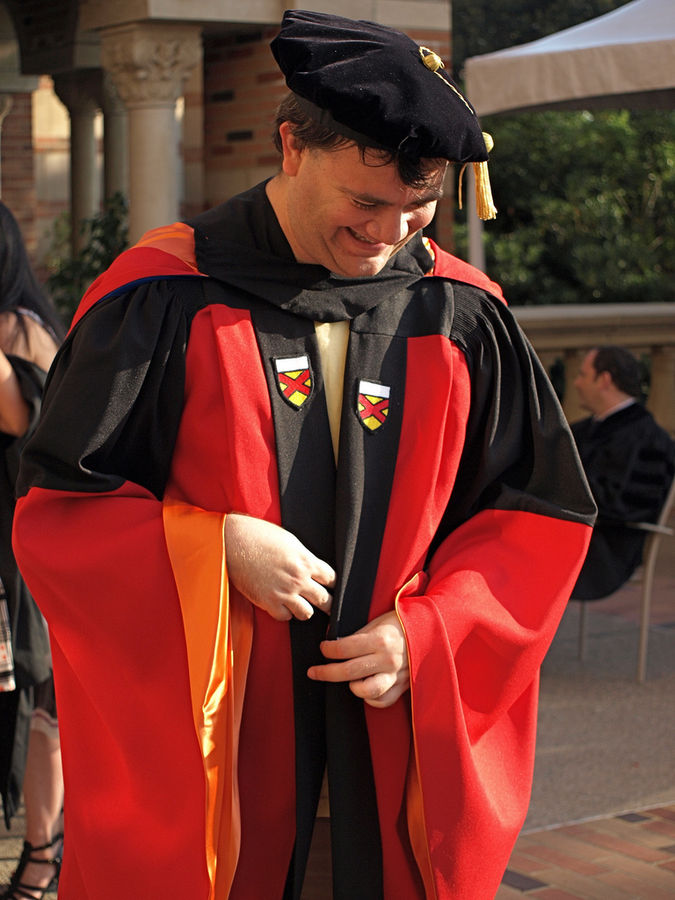
Traditionally, the Ph.D. is intended to prepare students for a career in academia. Most Ph.D. students hope to obtain a prestigious post-doctoral fellowship, followed by a tenure-track professorship, upon graduation. But The Chronicle of Higher Education reports that 76 percent of the academic labor force consists of adjunct professors who can’t qualify for tenure and make about $2,700 per course.
However, that doesn’t mean you shouldn’t earn a PhD. Earning a doctorate gives you critical thinking skills, teaches you how to collaborate, and bestows a level of expertise in your field that employers place a premium on. A Ph.D. can still lead to a lucrative career path, as long as you look for opportunities outside of academia upon graduation. You just have to learn how to market yourself, and you may want to seek advice from other Ph.D.-holders who have successfully navigated the transition out of academia.
Decide What You Have to Offer Non-Academic Employers
The smoothest career transitions out of academia belong to those who hold Ph.D.s in STEM fields — industry has long valued experts in science, mathematics, technology, and engineering. But you don’t have to hold a STEM Ph.D. in order to have a lot to offer a company. Ph.D.s in all fields impart some of the following qualities:
- Strong communication skills
- The ability to express complex ideas in a way that is easy to understand
- Creativity
- Problem-solving skills
- Self-direction
Translate the academic skills you learned while doing your Ph.D. into marketable job skills. You may have little industry experience, but if a company wants two or three years of experience, you can argue that work you did in the course of earning your doctorate required some or all of the skills needed for the job. Be specific about which of your skills meet the company’s job requirements. Customize your CV and cover letter to each position.
Allay Recruiters’ Fears About Candidates With Ph.D.s
Companies often fear that Ph.D.-holders will be too introverted, won’t be able to communicate with “regular” people, or will get bored with an industry job if they don’t feel intellectually stimulated. Let recruiters and interviewers know that you’re personable and down-to-earth, with great communication and people skills. An industry job can be just as intellectually stimulating as degree work or an academic position; make sure you can convey a genuine excitement about the job for which you’re applying. Point out that, in many Ph.D. fields, you need to be a team player in order to complete research or teach classes.
When you do a Ph.D., you’re essentially seeing a long and challenging project through to completion — play up that fact in interviews. Make clear that while you’re capable of working well with others, you’re also capable of working independently without a lot of supervision. Draw attention to your sense of accountability and remember, just because you have a Ph.D., you’re not inherently smarter than any of your future colleagues. Don’t act as if you’re owed a position.
Talk to Others Who Have Left Academia
You’ll have an easier time transitioning into an industry position if you complete a Ph.D. that prepares you for work in industry, especially one with strong, expected growth. But if you already have a Ph.D. in French, Russian literature, history, or some other field that appears to have a solely academic focus, don’t worry. You can translate any Ph.D. into a well-paid job.
Start by joining a professional organization for Ph.D.-holders who want to work outside of academia, such as Versatile Ph.D. Versatile Ph.D. sponsors nationwide networking events and more casual meet-ups for Ph.D.s who have, or want to, pursue careers outside of the Ivory Tower. You can discover more about your career options, find job listings on the group’s website, and get advice from other Ph.D.-holders about how to find jobs outside of academia. Registration is free, and members of one of the site’s many subscribing institutions can access premium content designed to help them find jobs.
Though the Ph.D. is traditionally meant to prepare students for a career in academia, the skills it teaches can be useful across a range of industries. Don’t feel that your Ph.D. limits you to teaching at the university level. In fact, it can open doors to lucrative, stimulating, and fulfilling careers in all kinds of industries, no matter what your field of study.
Best Tech Startups for Education in 2015
Edu-tech
According to custom USA essay writers, education technology has emerged to ease the pressure in the classrooms and well as to equip learners with the necessary skills for the good of the society. As a result, the education has devoted its resources in creating a suitable environment that suits the growth and development of learners. Budgetary team pays a keen eye on funding learning institutions in order to propel technological advancement as well as to meet the increasing demand for the students across the world. Based on the above agendas, how are the current trends in the tech start-up?
Online Studies
According to International Academia Research Group, e-learning is increasing at the rate of 13% annually. This proliferation means that business organizations and learning institutions will allocate more than $210 billion in the technology line by 2018. E-learning is flexible since potential students can pursue their degree of choice from the comfort of their homes. This learning model helps the learners to customize their devices and access most of the learning materials.

Skills Acquisition
Tech start-ups create a competitive learning model where the participants demonstrate their know-how towards working with different devices. If this knowledge utilized in an organization, numerous benefits will occur. Simulation, modeling and interchanges among students, are critical under start-ups since new ideas develop. Online educations will help students gain skills that match what a company requires.

Flip Learning
Tutors stream videos through particular links that students utilize in order to upload video whether at home or school. Then, lecturers consolidate the students in classrooms to brief them on the coverage of the video. This learning model helps in optimizing students’ interactivity. With the current trend, education will continue being enjoyable and beneficial to the society.

The Best Laptops for Students in 2015
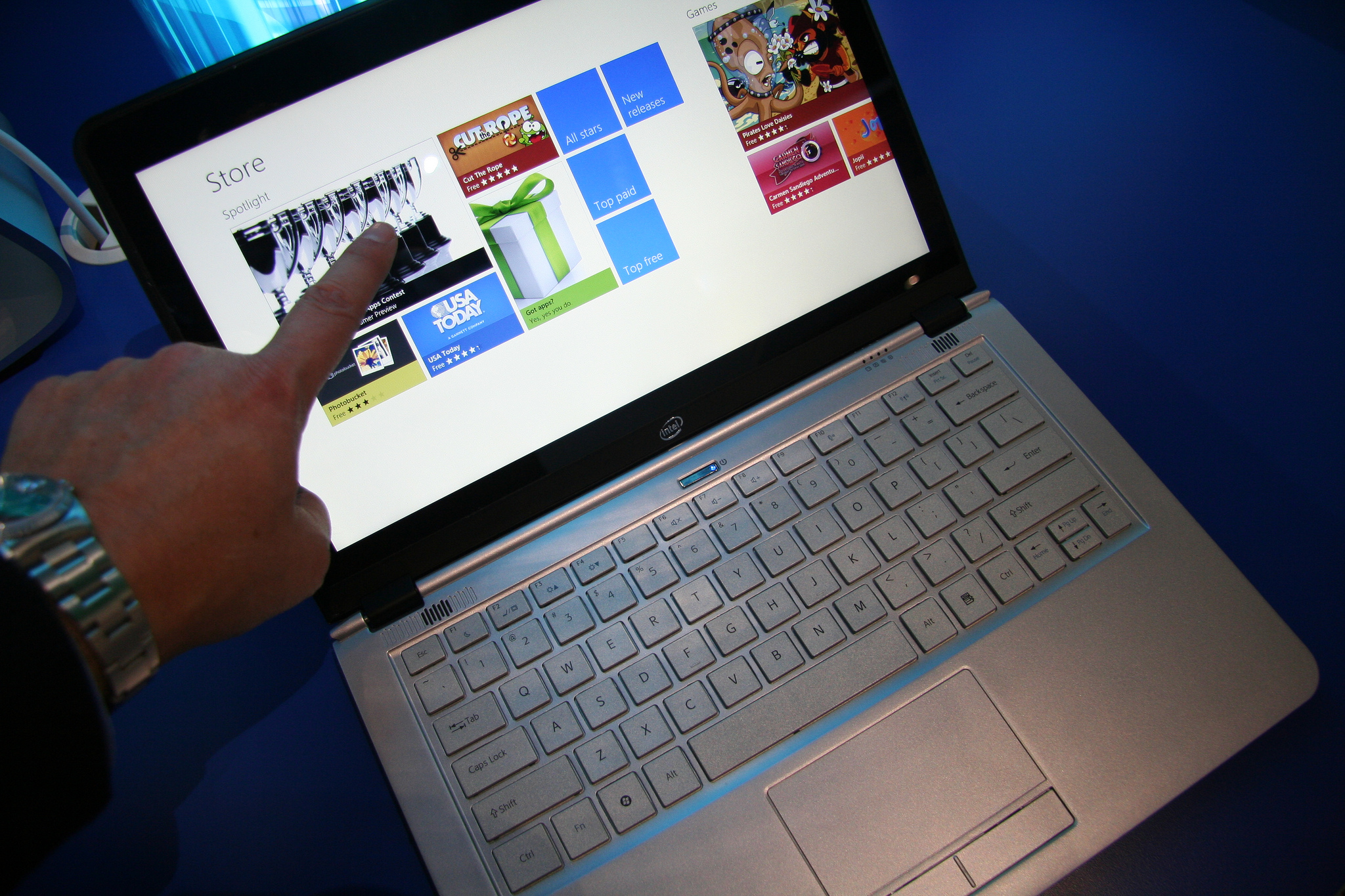
Computers are vital for students these days, but the need to spend less while getting the best possible performance is stronger than ever. Many are looking to acquire ultrabooks, which combine a light body with solid state drives (SSD’s) for a computer that is tougher, faster, and more quiet than laptops with normal hard disk drives (HDD’s).
The latter type of laptop is also getting smaller, though there are limits on how small they can get, due to technical issues with respect to how hard disk drives operate. Which of these small units are the best laptops for students in 2015? Check them out below…
You just need to get on the internet: Chromebook
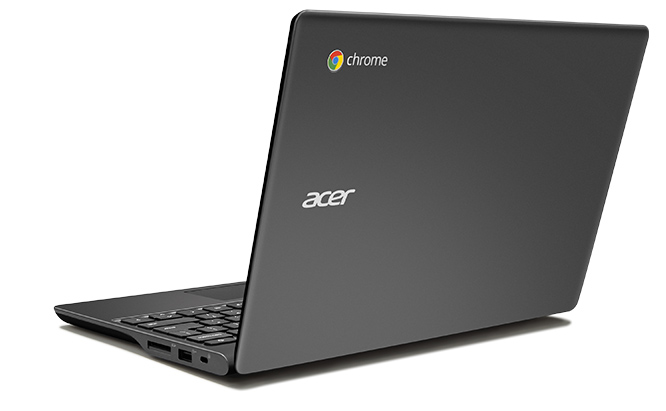
These days, more functions that used to be handled by applications on your computer are being moved to the cloud. From word processing to games, most only need to access the internet to get work done or relax.
It is this cultural shift that the folks at Google are counting on, as they have entered the PC market in recent years with the Chromebook. Lacking the bells and whistles of its competitors (no CD/DVD drive for example), this sleek unit is the best option of those looking to spend the minimum on a computing system, as they can cost as low as $200 and no more than $400. They are also easily carried around to class or thrown in a backpack, and they usually get good battery life.
Google does not manufacture these computers, instead having companies like HP and ACER construct the units while they supply the operating system that runs the ultrabook.
You want a unit that can handle most tasks at a cheap price: Asus Vivobook X200LA
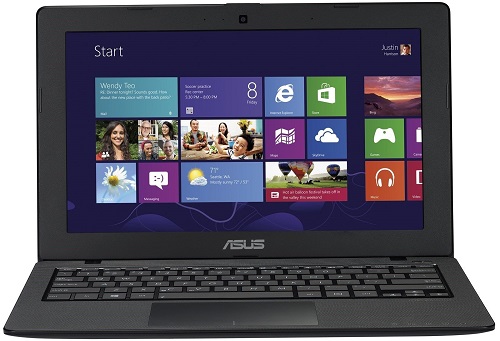
If you plan to use your ultrabook to download and listen to music, use applications like Microsoft Word to write term papers, or binge watch shows like the Walking Dead, you’ll need to move up the price ladder in order to achieve this end.
Of all the ultrabooks that offer the computing power necessary to achieve all these goals, the Asus Vivobook X200LA is your best choice. To realize the greatest performance without blowing this ultrabook out of your budget range, it does employ an HDD instead of a SSD, but makes up for it with a touchscreen that emulates the best features of a tablet, while retaining a keyboard for when its time to get down to business. For no more than $500, this well-rounded unit can be yours.
You are an artistic type, or consider yourself too cool for school: Macbook Air 11
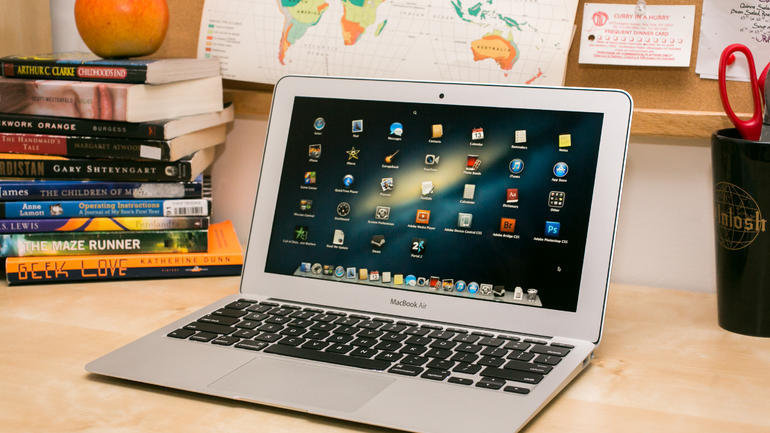
While the Macbook Air 11 is the most expensive machine mentioned in this article, the features that this beauty boasts makes it well worth paying the $800 to $1,000 it costs to acquire it. With nine hours of battery life, feel free to work on your creative arts essay from the comfort of your favorite cafe, without worrying about the availability of power outlets, and with 128 GB of SSD storage, the responsiveness of this computer will make you question why you ever owned a PC in the first place.
Do you think you have another candidate for the best laptops for students in 2015? Drop your contender in the comments below!
5 Ways Students Can Save Money

With in-state tuition for public universities approaching $10,000 these days, and other costs like housing and books escalating in lockstep, it has never been more important for students to save money while at school.
While it is easy to just use credit to charge all these expenses, the bill will come due someday soon, so you owe it to your future self to not cripple yourself with an unmanageable debt load. As such, here are five ways students can save money so that they can give themselves a brighter financial future, as well as more disposable income for the important things in life.
Like beer.
And video games.
1) Take on roommates
While you might crave privacy after 18 years of living at home with your parents, the unfortunate reality is that college is more expensive than it ever has been. The good news is that you get to choose who you are sharing a living space with, making for a living atmosphere that will be much more lively than if you were to go it alone. This will divide your house or apartment rent to a level that will allow you to enjoy a diet that consists of more than ramen and water.
2) Cook meals with friends
When you share a house with friends, another opportunity to save your precious cash presents itself. Instead of cooking meals individually, you can take turns making meals for each other. This will require coordination when it comes to shopping at your local supermarket, but once you settle into a groove, you will be spending less per person, eating better than you would individually, and the kitchen will be less crowded. So much win!
3) Order as much as you can online
The internet age has made our lives so much easier, with no better example than online shopping. Why burn gas and time running all over town to buy the things you need for school and life when you could just click a few buttons and wait for it all to come to you?
If you want to save money on school supplies, this is the perfect way to do things in 2015, as many coupon sites allow you to spend even less than the already reasonable prices listed, and with many deals waiving shipping charges, you can spend the time you just saved playing Call Of Dut- … er, I mean, studying for that stats term paper coming up. Yeah, that’s right.
4) Have house parties instead of going out to the bars
With prices for booze escalating with every passing year, going out to the bars is a fun pastime that composes an ever-larger chunk of student budgets. While heading out to a venue out on the town is always a great time, the whole point of drinking is to have a killer time with your buds.
Why can’t you do that at home at least some of the time? Buy a 30 pack of PBR or Natty Ice, organize a playlist of awesome tunes from your totally legal song collection, and enjoy the fact that you can socialize without having to pay a $10 cover charge for the privilege.
5) Buy used textbooks
These days, it’s estimated that students in some faculties will have to shell out more than $1,000 for books per semester. This is truly insane, and while books have new editions every six months or so, they often change so little that students can buy them off each other for much less than what it cost new.


