




Where to visit near Bali

Visiting Bali soon, but want to see a bit more of Indonesia than this uber-popular island? Next door, there is an island by the name of Lombok that has many of the natural and cultural charms that Bali has, but without the hustle and bustle that can plague much of Bali today.
Wondering what places you should visit here if you have a week to spare there? The following destinations will give you an island to rave about to friends back home that isn’t as well known as Bali (giving you those all-important bragging rights when it comes to travel)…
1) Senggigi
If you’re looking where to visit near Bali where you can access most of the conveniences that you come to expect from a tourist destination, then Senggigi is the place where you’ll want to hang your hat during your stay in Lombok.
While it is nowhere near as built up as Kuta, Seminyak or Ubud on Bali, Senggigi is home to enough restaurants, cafes, bars, and karaoke parlors to keep those in need of constant stimulation busy, and with tons of tours and cooking classes available through tour agencies, those seeking a bit more action will be well catered for as well.
2) Gili Islands
Senggigi has a beach that is good enough for some, but if you consider yourself a connoisseur of these seaside attractions, then taking a day trip to the Gili Islands (three are inhabited: Trawangan, Air and Meno) will satisfy your longing for beauty in this aspect of nature.
Diving and snorkeling are popular in the reefs located off these isles, while those looking to get their day drink on will find no shortage of venues to do the job on Gili Trawangan.
Those looking for a more chill atmosphere will find it on Air and Meno, which have not been as overrun by the party crowd as Trawangan has.
3) Kuta (Lombok)
Those fearing the hawkers, noise and insane traffic of the Kuta on Bali will find the complete opposite on Lombok’s version, which remains much more tranquil than its neighbor across the Lombok Strait.
One thing the two towns do have in common is excellent surfing: the breaks here have long served as a refuge for those sick of the scene in Bali, and while its secret does seem to be getting out (oops), it is still a world apart from the party-hearty nature of South Bali, making it a great place to get away from it if it isn’t your cup of tea.
Does an itinerary like this sound great to you, but you haven’t the first clue where to start? Luxury travel planners like eShores (www.eshores.co.uk) specialise in assembling the logistics for trips like these, allowing you to go about your daily life while the professionals plot out the journey of a lifetime.
Comfort, Counseling and Care: Are You Considering a Career in Psychology?
The subject of psychology is relatively young. People have likely pondered thought processes and behavior for centuries, yet it did not begin to become a course of study until the turn of the 20th century. Today, plenty of people enlist in courses of psychology, which lead to a number of potential careers. However, not many know their options.
If you’re considering a career in psychology, read the following to realize the diversity of career choices.
Vocational Counselor
The US economy is in the wake of the Great Recession. A lot of people have switched careers, been laid off, or released from previous positions, which makes them anxious and in need of suggestions. Vocational counselors help others find jobs and successfully pursue careers. Aside from a person’s wants and intuitions, vocational counselors survey skills and help align clients with a realistic and rewarding career path.
School Psychologist
School psychologists work with children to alleviate social, academic, and emotional problems. School psychology is a fast growing field due to increased interest in the mental health and academic progress of kids and teenagers. At the moment, the demand for school psychologists outgrows the number of those qualified.
Counselor
Counselors help those with a range of immediate and long-term issues, whether it be associated to family, marriage, education, or substance abuse. A significant amount of counselors work in the health care and social welfare industries. A smaller percentage work for state and local governments and usually need a master’s degree and state license.
Genetic Counselor
Genetic counselors provide data regarding genetic disorders, helping couples and families make educated decisions. Such professionals have advanced degrees in psychology and genetics, with undergraduate degrees in biology, psychology, nursing, and public health. Genetic counselors work with medical professionals such as doctors, nurses, and geneticists to provide counseling to people who are dealing with a family member’s disorder or who have the potential of passing down a genetic disorder to offspring.
Forensic Psychologist
Forensic psychologists assist detectives and police officers with crime scenes and evidence. Aside from adventurous roles depicted in movies and television, forensic psychologists work with experts to resolve child custody issues, question insurance claims, evaluate child custody cases, and investigate those suspected of child abuse.
Clinical Psychologists
Clinical psychologists are professionals most conjure when thinking of psychology workers. Such professionals assess, diagnose, and treat clients who host disorders. Clinical psychologists work in hospitals, clinics, and private practices. It’s not simple to become a clinical psychologist; you must attain a doctorate-level degree in clinical psychology, and many states require an internship period. Moreover, graduate schools are tough to get into and very competitive once there. Most states host advanced degree programs; find an online college in Texas, seek out traditional universities in your area, or do an online search for programs in your area and beyond.
Sports Psychologist
Sports psychologists work with athletes, coaches, and entire teams, focusing on motivation, performance, and injuries. A sports psychologist does not necessarily need to work within an organization; alternatively, some use athletics to help people overcome emotional and physical ailments. Sports psychologists can work in hospitals, athletic centers, or have their own private practices.
If wondering about thoughts and behavior has always been an interest, and you like the idea of helping others both mentally and physically, a career in psychology is right for you. Once you attain a Bachelor’s degree, you can then focus on proceeding with your education, specializing in school, sports, clinical, genetic psychology, and beyond.
Albert Rodriguez has spent many years in the frontline of psychological services. He always appreciates the chance to share his insights online. You can find other articles written by him on several different relevant websites.
The Second Screen Revolution

Advertising is the lifeblood of television broadcasting, and back in the day, advertisers had very little competition for viewers’ attention during commercial breaks. Sure, we might run to the bathroom or grab a snack, but there was a pretty good chance that we would take in most of the commercials along with the show.
The digital revolution changed all that. Today, the television screen no longer holds our attention as completely as it once did. Instead, a host of other screens vie for our interest even as we watch our favorite shows. Over a third of us are eyeing another screen as we watch TV, and the number jumps to nearly 70% in households with kids under 18.
What are we doing on those other screens? Checking our email on our laptops. Surfing the web on our tablets. Texting with a Samsung Galaxy smartphone or other cellular phone. Some of us are even shopping online. All of these are easy with a fast and reliable 4G LTE network such as T-Mobile.
But more and more of us are doing things related to the shows we’re watching—looking up the actors and actresses, searching Wikipedia for information about them, or seeking out other sites related to the show.
Our attention spans have become shorter, and our boredom threshold lower. We simply can’t be bothered to sit through boring old commercials anymore. With this in mind, advertisers are looking for novel ways to engage customers while their attention is on their smaller screens.
This is sometimes as simple as synchronized ads that push products on multiple screens at the same time; however, television is taking a page from the content marketing book and creating apps that not only push products, but complement the programming on the main TV screen.
Second screens have completely changed the way we view media, shifting us from passive consumers to active participants. The following infographic shows how it’s happened. This presents challenges, but also opens up a whole new world of possibilities.

3 ace ways to break away from your studies
As you study for your degree, has it ever occurred to you that all your effort might just be a tad useless?
No matter what the subject, we all fall into these states of ennui. You hit a wall and can’t ever quite break through again.

So what’s the solution? Well, you should always leave your options open.
Don’t fall deep into one subject to never return. Instead, lightly skim a few wildly different options and make yourself a Jack of all trades.
But how can you find a few new hobbies? Here’s a few ways we’ve uncovered.
Beauty, of course
The beauty industry rakes in hundreds of billions of pounds every year – and it doesn’t seem like it’s going to falter any time soon.
If that sounds like a slice of cake you want a bite from, why not grab a few beauty qualifications along with your highfalutin degree.
Dermal filler courses, for instance, can get you a place in any beauty salon and help you key into a trend that’s gaining more traction every day.
Moreover, if you’re pursuing a business-based degree of some sort, the lucrative beauty game will give you the chance to manage an enterprise almost guaranteed to strike success.
High society
Societies are the lifeblood of the student with plenty of time to fill. And they could even help scratch the itch when you’re feeling tired of your course.
They don’t come in one homogenous package, either. Depending on the management style and general focus of a group, two sports societies could provide entirely different experiences.
When people say they attend university to “find themselves”, it’s rarely their actual course that helps them out. Instead, it’s the societies and the people they meet within them. Unlike the admin heavy world of uni, societies are more free-wheeling.
Dip in and out of societies until you find one that really grabs you. Like a tentacle from a b-movie monster, you’ll be sucked into your hobby – and you might never want to leave its warm embrace.
Outside campus walls
Some students outright refuse to leave their university campus. Whether they’re in student apartments that resemble matchboxes or campuses like metropolises, those averse to risk won’t want the opportunity to explore a new location.
Don’t be one of those dullards. The city is there for you to use. It’s brimming with volunteering opportunities, job vacancies and social events that your university would never bother to host.
It’s a world away from the standard 18-24 experience offered by most campuses. So strike out on your own for a while and use the city to its fullest.
How to Turn a 2.1 Essay into a 1st
A 2.1 is a very respectable mark. It shows that you have presented a high quality piece of work which demonstrates your understanding of the key issues and your engagement with the subject. A 2.1 will show that you know how to present and write a good piece of academic work, plus prove that you have paid careful attention to the key sources in your subject area.
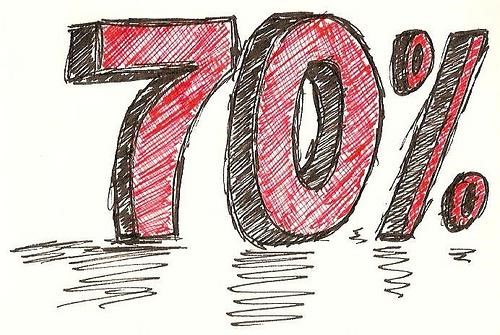
But what if you have greater aspirations? The line between a high 2.1 and a low 1st is incredibly thin. This means that there are a few steps you can take which could be all that is required to make your 2.1 essay first class. If you can attain a 65% 2.1 with your essay, there are a number of things you can do to make sure it crosses the 70% line and becomes a 1st class piece of work.
Just to refresh your memory, here’s how University marking criteria works:
- 80+ – High 1st
- 70-79 – 1st
- 60-69% – 2.1
- 50-59% – 2.2
- 40-49% – 3rd
Now here’s how to jump from the high 60s to the low 70s and attain your first. The useful tips below come straight from the essay writing service “Oxbrigde Essays”. For more tips, tricks and support follow Oxbridge Essays on Google plus to get the latest helpful how tos.
1. Know your sources
Understanding the most important sources in your subject area is essential. If you want to turn your 2.1 essay into a 1st, you need to know a lot about the theoretical landscape of your essay. That means you should give the most important writers on the subject precedence in your essay, while also exploring other, lesser known writers who may have contributed unusual ideas or less popular theories to your field of study.
A good way to do this is to take a good look at the references and bibliographies attached to the best existing essays and books in your subject area. Exploring your university library, along with online resources like JSTOR will also help you extend your range of sources and learn which authors really matter.
2. Be original
Although your essay should contain all of the most important sources (and a few extra interesting ones) , your work should never just be a collection of the best sources and their most illuminating quotes. Your essay needs to show original thought if you want to get a 1st. Use your sources to back up or inspire your argument, don’t let them take over. Every time you use a quote or reference ask yourself “how does this back up my argument?” or “how does this extend the discussion?”. If it doesn’t, don’t include it.
3. Plan your argument
A key difference between 2.1 essays and 1st class essays is the quality of the argument. While the argument in a 2.1 essay will be clear and logical, in a 1st class essay it should be even better. You need to demonstrate a sophisticated argument.
To do this it’s vital that you plan your essay thoroughly before you begin writing. Decide on your viewpoint, then think through every persuasive argument you could use to make your standpoint convincing. Make sure you also think about arguments which could disprove your points, then make sure you address these in your essay too. Prove that you’ve thought everything through, step-by-step, to leave the marker convinced of your ideas and you’ll have earned a 1st.
4. Talk to your tutor
One of the best ways to raise your mark is to talk to your tutor. They can cast an expert eye on your essay, recommend extra sources, point out weak arguments and tell you where you’re going right. With this expert advice you can hone your work and make sure you get a 1st.


